Midtown Houston For Urban Professionals
If you want Houston convenience without feeling boxed into a purely office-driven district, Midtown deserves a close look. For many urban professionals, the challenge is finding a neighborhood that makes daily life easier, from quick commutes to walkable dining and a home that fits your schedule and budget. Midtown offers a practical middle ground, and this guide will help you understand how it lives, what you can expect from the housing mix, and whether it may fit your next move. Let’s dive in.
Midtown is one of Houston’s most established urban living districts, positioned between Downtown and the Museum District. That location gives you strong access to major job centers, cultural destinations, and day-to-day conveniences without requiring you to live in the middle of a traditional office core. If you want an Inner Loop lifestyle with movement and energy, Midtown checks many of the right boxes.
The district also leans into public space and culture in a way that shapes daily routines. Midtown Houston notes that the area includes 12 parks within its boundaries and 12 more within a quarter-mile walk, totaling 143 acres. Along with arts, entertainment venues, murals, galleries, and music spots, that creates a neighborhood feel built around activity and access.
One of Midtown’s biggest strengths is how easy it can be to get around. Independent neighborhood data rates Midtown 90 out of 100 for walkability and 90 out of 100 for transit, which stands out in Houston. Apartments.com also reports that errands are quick and hassle-free, with a supermarket within a five-minute walk.
For many residents, that means Midtown supports a car-light routine. You may still want a car or rideshare as backup, but it is realistic to walk to meals, parks, and some daily needs while using rail for key trips. If your goal is to simplify your week, that kind of flexibility matters.
METRO’s Red Line serves Midtown directly through Midtown/Ensemble-HCC, McGowen, and Wheeler stations. According to METRO, trains run about every 6 minutes on weekdays and every 12 minutes on weekends. Midtown and Midtown Park are also listed among the line’s popular destinations.
That rail access is especially useful if your routine includes Downtown or the Texas Medical Center. Midtown Park Plaza, a 0.5-acre greenspace steps from McGowen Station, also highlights how closely the neighborhood is tied to transit. For professionals balancing office time, social plans, and short commutes, this setup can be a real advantage.
Midtown’s appeal is not just about getting around. It is also about having a lot of your life within reach. The neighborhood’s official site describes a dense mix of diverse dining, bars, nightclubs, murals, galleries, and music venues, all within walking distance.
You can see that variety in the local lineup, which includes coffee spots, casual dining, and nightlife destinations such as TAGO, Un Caffe, Kefita Coffee, The Alley Kat Bar & Lounge, Styx & Stone, The Dogwood, and Wonder Bar. If you like the idea of finishing work and stepping into your evening without a long drive, Midtown makes that easier.
Midtown’s parks are designed more for everyday urban use than all-day recreation. That is a big part of the neighborhood’s rhythm. Instead of relying on one giant park, Midtown offers a network of smaller, useful public spaces that fit into normal routines.
Midtown Park spans six acres and includes a great lawn, interactive water feature, playground, dog run, art walk, and gardens. Bagby Park offers 30,000 square feet with a shaded lawn, dog park, bocce, water elements, and regular events. The park network also includes Elizabeth Baldwin Park at 4.8 acres and Glover Park at 4 acres.
For urban professionals, these spaces often function as lunch break backdrops, dog-walking routes, casual meeting points, and event spaces. That may sound simple, but it can make a neighborhood feel far more livable during the workweek.
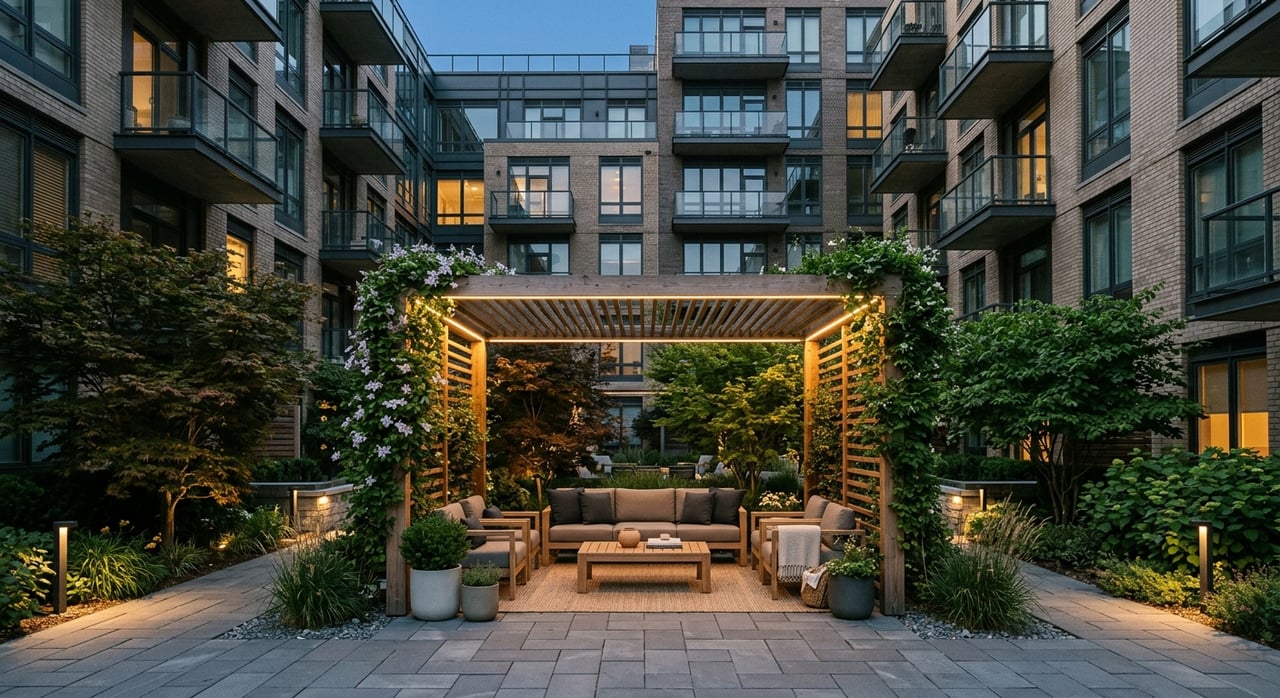
Midtown is largely an apartment, condo, and townhome neighborhood. For renters, the market is concentrated in studio through three-bedroom layouts, with studios, one-bedroom, and two-bedroom homes being the most visible options. For buyers, current listings show a mix of condos and townhomes, including studio through three-bedroom condos and multiple two- and three-bedroom townhomes.
That makes Midtown especially appealing if you want low-maintenance urban housing rather than a traditional large-lot single-family home. The available housing types also align well with many professional lifestyles, whether you want a lock-and-leave condo, a flexible townhome, or a rental near rail access.
As of April 2026, Realtor.com reports:
For apartment renters, Apartments.com reports average rents of:
Those numbers help set expectations, but your actual cost will depend on building style, location, updates, amenities, parking, and floor plan.
The right choice depends less on headlines and more on your timeline. If you expect to stay put for a while and want to build toward ownership, buying in Midtown may deserve serious consideration, especially in a buyer’s market. If your job, relationship, or long-term plans may shift in the next few years, renting may offer more flexibility.
The Consumer Financial Protection Bureau notes that ownership costs can include mortgage principal and interest, mortgage insurance, property taxes, homeowners insurance, flood insurance, HOA fees, maintenance, repairs, and utilities. It also notes that closing costs typically run about 2% to 5% of the purchase price. Those are important factors to weigh before deciding that buying is automatically the better financial move.
Renting may fit your needs if you:
The CFPB also notes that renting can make more sense if you may move within a few years, since buying and then selling again creates added transaction costs.
Buying may be worth exploring if you:
If you are comparing both paths, a neighborhood-specific cost analysis can help you look beyond monthly payment alone.
Midtown often makes the most sense when you compare it with nearby alternatives. It is not trying to be Downtown, and it does not read exactly like Montrose either. Its strength is that it sits between those two experiences.
Compared with Downtown, Midtown is slightly less expensive on the rental side and offers much more residential inventory. Midtown’s median rent is about $1,680 versus Downtown’s $1,945, and Midtown has 105 homes for sale compared with Downtown’s 44. Downtown Houston is more office-heavy, with more than 50 million square feet of office space and access to every major transportation mode, so it tends to feel more commuter-oriented.
Compared with Montrose, Midtown is much more accessible for many buyers. Midtown’s median listing price is about $350,000, while Neartown-Montrose sits around $729,000. Montrose is widely known for its creative energy, galleries, dining, nightlife, and cultural identity, while Midtown tends to feel more convenience-forward and transit-linked.
Midtown can be a strong fit if you want:
In short, Midtown tends to work well for buyers and renters who value access, efficiency, and an active neighborhood setting.
Even in a well-known neighborhood, your experience can vary from one pocket to another. In Midtown, the difference may come down to how close you want to be to rail, nightlife, green space, or a quieter residential stretch. That is why it helps to look at not just the neighborhood, but the exact building and block.
As you narrow your options, pay attention to:
For many professionals, the best Midtown move is the one that reduces friction in everyday life. The right location can save time, simplify errands, and make the neighborhood’s amenities feel truly useful.
If you are considering Midtown, a tailored search or side-by-side comparison can help you quickly identify whether renting or buying makes more sense and which pockets of the neighborhood best match your goals. When you are ready for a more strategic look at Midtown or other Inner Loop options, Nicole Brende can help you build a smart, lifestyle-focused plan.
Nicole's dedication to her clients is evident in every aspect of her work, from her exceptional communication skills to her unparalleled marketing expertise. With her unwavering commitment to providing tailored solutions to her clients' real estate needs, Nicole has established herself as one of the most sought-after agents in Houston.