In Tanglewood, A Rebuild Starts With The Front Yard Trees
The Tanglewood Area ranked first among Greater Houston's luxury communities for the third quarter in a row, according to the Houston Association of Realtors' Hottest Communities report released October 26, 2026. The Tanglewood Homes Association says the neighborhood's original ranch-style homes are being replaced by new ones, and none of those older houses can come down until two surveys are on file with the association.
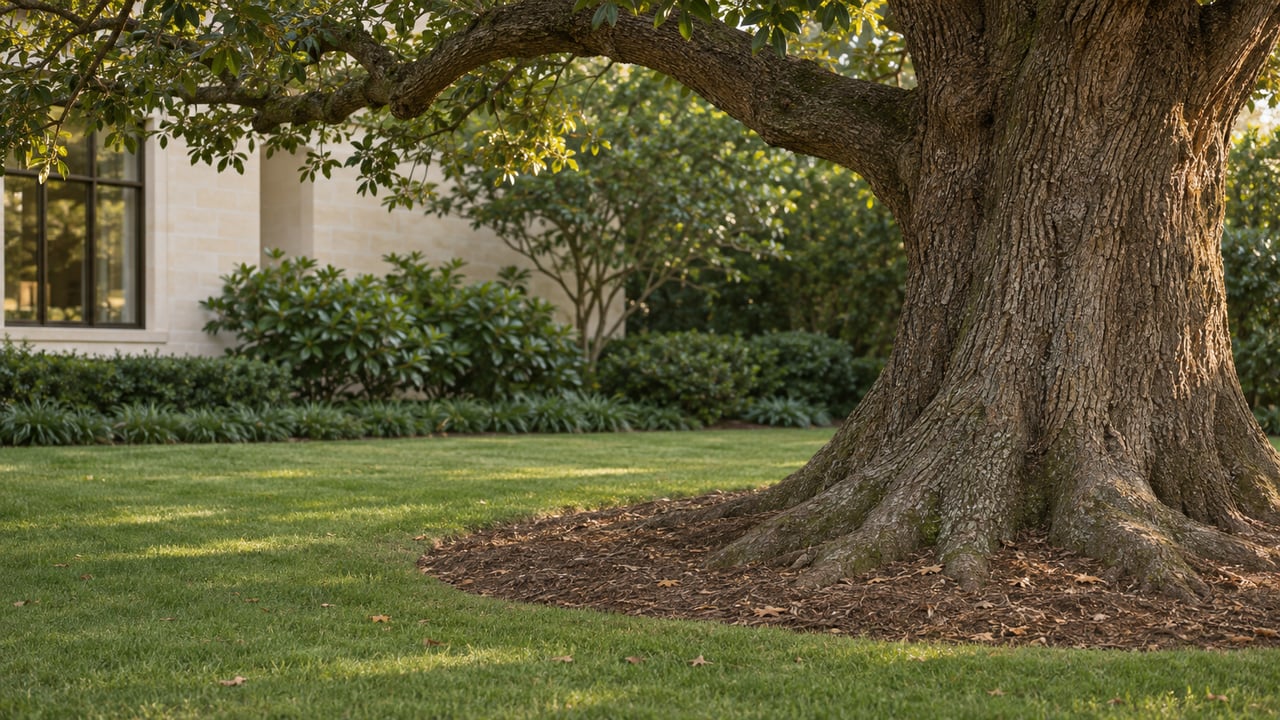
That order of operations sets what a Tanglewood lot can become. THA's rules start with the trees in the front setback and the plan for protecting them, well before the floor plan. A buyer who pays a rebuild-lot price is also buying that sequence.
HAR counted 24 sales in the Tanglewood Area in the third quarter of 2026, up from 13 a year earlier, an 84.6% increase. The average price was $2,705,229. Across Greater Houston, the $1 million-and-up single-family segment moved the opposite way over the same three months. HAR's monthly reports showed 407 of those sales in July 2026, up 9.4% year over year. August had 334, down 2.1%, and September had 304, down 8.2%.
The top of Tanglewood's market this fall has been new homes. Houston Agent Magazine named 5324 Holly Springs Drive, a 10,708-square-foot Tanglewood home listed at $6,999,900, the priciest sale in Greater Houston for August 2026. In early September, the Houston Business Journal reported that a brand-new Tanglewood custom home by Goodchild Builders was the area's top sale of the week.
The other end of that pipeline is still on the market. This fall, a 1952 house on Longmont Drive was listed at $2,150,000. The listing put the lot at 16,622 square feet, said the house was sold as-is, and led its description with the lot and its trees. The marketing starts with the trees, and so does THA's process for anyone who plans to build there.
THA says it began as a neighborhood of ranch-style homes in 1949, "many on oversized lots," and that "older homes are being replaced by new homes." Policies and deed-restriction amendments "now strictly govern new home approval." The association employs a field supervisor to monitor construction. Based on the association's construction page and its Tree Preservation Policy, the sequence for a teardown runs like this:
The root zones of the trees that stay are on paper before an architect's footprint can be approved.
The Tree Preservation Policy took effect March 1, 2008. It covers the front setback on interior lots and both the front and street-side setbacks on corner lots. Lot width decides which set of standards applies:
| Rule | Lots 65 feet wide or less | Lots more than 65 feet wide |
|---|---|---|
| Protected Tree | 15 inches or more in diameter at 4.5 feet, in the covered setback; hackberry, cottonwood and Chinese tallow excluded | Same |
| Minimum trees, interior lot | Two Small Trees in the front setback and/or right-of-way | Two Large Trees |
| Minimum trees, corner lot | Three Small Trees | Three Large Trees |
| New or replacement tree | At least 4-inch caliper and 12 feet tall, from THA's Small Trees list | At least 6-inch caliper and 15 feet tall, from THA's Large Trees list |
Up to two of the required trees can stand in the right-of-way. The policy describes that strip as the unpaved grass between the curb and the property line, typically about 16 feet deep, and trees there fall under the City of Houston's ordinance. The city's Tree and Shrub Ordinance page links to the governing chapter of the City Code.
The policy is specific about removal. An owner may remove a Protected Tree that is diseased or that grows within 15 feet of a proposed foundation. The policy also states that "constructing a circular drive is not deemed to be justification for removing a Protected Tree." Removing a Protected Tree during construction, or for one year after completion, requires a written request explaining why. On many lots, then, the front elevation and the driveway are designed around trees that already stand.
Buyers who plan to keep and expand an original house aren't automatically outside the policy. THA defines "Major Remodeling" as any construction that increases the building footprint by 20% or more, and Major Remodeling is covered just as a teardown is. Widening the driveway in the front setback or right-of-way also counts as construction under the policy. On a single-story ranch house, adding a primary suite can easily push the footprint past that line.
THA's Rules and Regulations cover the build itself. Outside work can start at 7:30 a.m. on weekdays and must stop at sunset. On weekends the hours are 9:00 a.m. to 6:00 p.m., and no work is allowed on major holidays. Construction vehicles park on the construction side of the street and may not use or block a neighbor's driveway. Porta-cans sit as far back from the street as service allows, screened on three sides with the door facing away. Temporary construction fences need approval before they go up. Tree-protection barricades go around drip lines, and vehicles, equipment and materials stay out of those zones. The tree policy adds a bilingual "TREE PROTECTION FENCING / DO NOT REMOVE" sign on each protection fence. Grading can't redirect drainage onto an adjoining property.
These rules are why the Builders Deposit Agreement matters. Under the agreement, the builder commits to the deed restrictions and approved plans for the length of the project, with the deposit at stake.
Tanglewood is made up of 23 platted sections, Sections 1 through 19 plus 4A, 11A, 11B and 17A. THA describes their deed restrictions as "virtually identical," with minor differences in setback lines, garage-door orientation, perimeter fences, house orientation and driveway entry location. Each section's documents are posted on THA's deed restrictions page.
Lovett Homes acquired 2.5 acres at 51 E. Broad Oaks Drive, between Tanglewood and Pine Shadows, for Broad Oaks Reserve. When Houston Agent Magazine reported the plan in July, prices were projected to start at $2.5 million for homes of 4,000 to 6,000 square feet. Lovett's project page now describes a gated enclave of 21 newly built homes of 3,800 to 4,600 square feet along a private drive named Broad Oaks Reserve Drive. Appraisal-district records show the previous improvement as a 4,524-square-foot house built in 1946 on a 108,910-square-foot lot, platted in the Broad Oaks subdivision.
That site went from one house to 21. Within Tanglewood's sections, the THA process described above runs one lot at a time, beginning with a tree survey before demolition.
What does THA charge a lot owner each year? THA lists a 2026 annual maintenance fee of $3,150 per lot, along with a $100 transfer fee and a $250 resale-certificate fee.
Do smaller exterior projects need approval too? Yes. Any work outside the house requires THA approval. For HVAC, generators, fencing, driveways, paint and roofing, approval is a one-page letter. All of those except paint and roofing also need a site plan showing where the equipment or fence will go.
Who handles a tree between the sidewalk area and the street? Trees in the right-of-way fall under the City of Houston's ordinance. THA's policy requires a copy of the city Parks Department's removal permit for any Protected Tree there.
This post is general information drawn from THA's published documents. It isn't legal, tax or financial advice, so please confirm the requirements for a specific lot with THA, the City of Houston, and your own attorney or other qualified professional.
If you are weighing an original Tanglewood house as a future rebuild, or getting ready to sell one, Nicole Brende can help you work out what the lot can hold before the rest of the plans are set. Let's connect. Schedule a consultation or request a custom market analysis.
Nicole's dedication to her clients is evident in every aspect of her work, from her exceptional communication skills to her unparalleled marketing expertise. With her unwavering commitment to providing tailored solutions to her clients' real estate needs, Nicole has established herself as one of the most sought-after agents in Houston.